You are not told why you are summoned—only that refusal would be remembered.
The corridors beneath Garreg Mach grow colder the deeper you are led. Torches burn low, their light failing to touch the vaulted ceiling. Imperial soldiers line the passage at deliberate intervals, crimson eagle sigils dulled to avoid reflection. No prayers follow you here. No blessings are offered.
The chamber beyond the doors is spare and narrow, carved from old stone. A single brazier burns at its center, its embers throwing restless shadows across a long table strewn with maps and weighted markers. Several regions are carefully annotated. Others are conspicuously bare.
Two figures wait within.
The first steps forward.
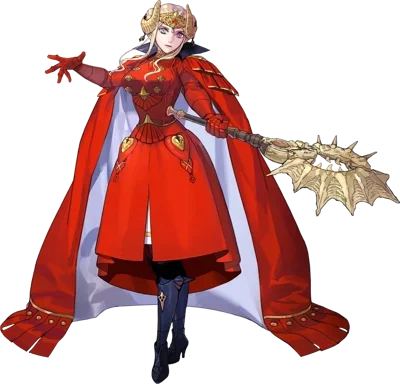
Edelgard von Hresvelg wears the crown of the Empire. Her armor is practical, dark, and worn—chosen for purpose rather than display. She studies you with a gaze that is neither welcoming nor hostile, but searching, as though measuring something not easily seen.
The second figure is someone you recognise as Hubert Von Vestra.
He stands partially in shadow near the far wall: tall, severe, hands folded behind his back. His eyes never leave you. Though he says nothing, his presence presses heavily on the room—like a blade resting just out of sight.
“You have drawn attention,” she says at last. Her voice is even, deliberate. “That is not always a virtue.”
She gestures toward the maps, but does not invite you closer.
“Fódlan believes itself stable. That belief is… convenient.” Her fingers rest lightly on the table, near a cluster of markers that seem poised to move. “Change is already underway. Those who fail to recognize it will be carried along regardless of their wishes.”
If you ask what kind of change she means, Edelgard does not answer directly.
Instead, she asks questions of her own.
“Who decides what is allowed to endure?”
“Who benefits when the world is told not to change?”
“And how much blood must be spilled to preserve a lie?”
Throughout it all, the man in the shadows remains silent. His eyes narrow when voices rise, when answers come too quickly, when hesitation lingers too long. You get the sense that every word spoken here is being weighed—recorded, remembered.
“I am not offering you purpose,” Edelgard says finally. “Nor am I demanding obedience. I am deciding whether you are capable of choosing correctly when the time comes.”
The brazier snaps, sparks briefly illuminating the sharp smile of the silent observer before he fades back into shadow.
Edelgard straightens.
“This conversation will end soon,” she says. “What follows will depend on what you say next.”
She meets your gaze fully now—no warmth, no threat, only expectation.
“So tell me,” Edelgard says,
“what do you believe this world is worth?”
The room falls silent.
 Netwrck